Mara Walter · 18 October 2026
Unpacking the Dynamics of Cross-Platform Data Synchronization in Emerging SaaS Environments
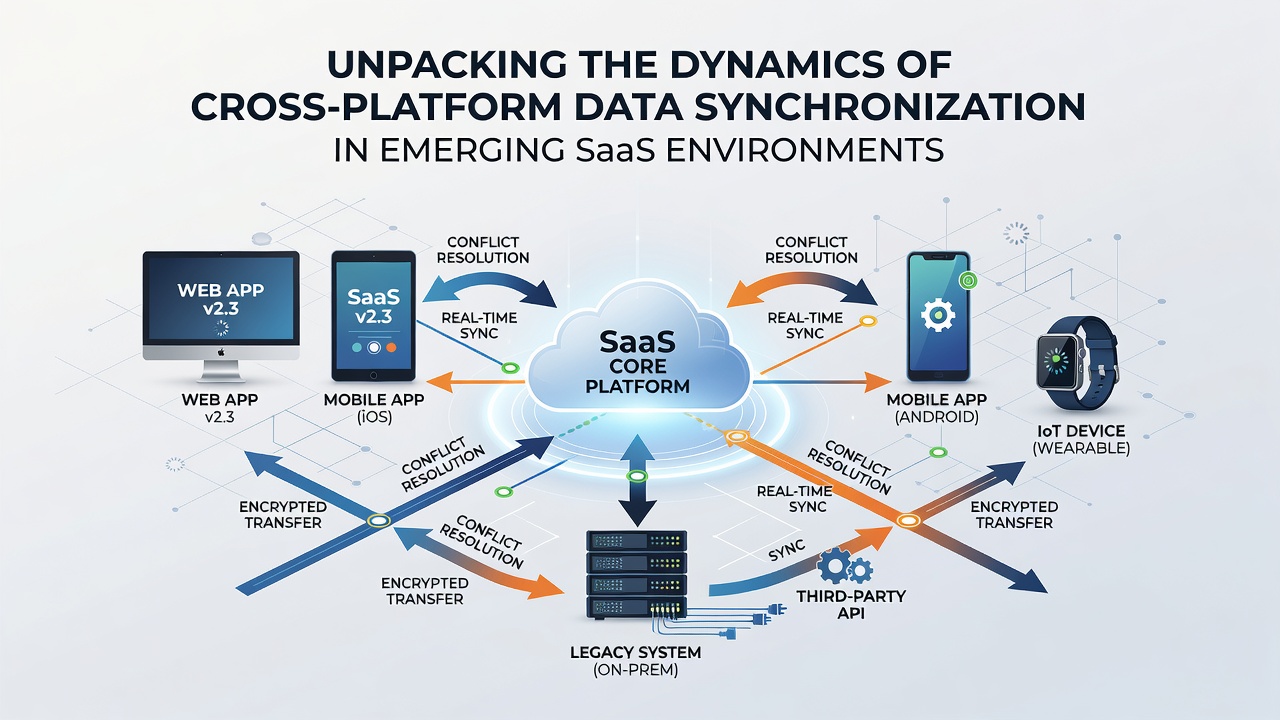
Cross-platform data synchronization in emerging SaaS environments involves the continuous transfer of information between disparate applications and systems so that updates on one platform reflect accurately on others without manual intervention, and this process has grown essential as organizations adopt multiple cloud-based tools simultaneously. Research from industry analysts indicates that SaaS adoption rates reached over 80 percent among enterprises by late 2025 with many companies relying on an average of 130 distinct applications that require seamless data flow to maintain operational consistency.
Core Mechanisms Driving Synchronization
Experts describe the primary mechanisms as API-driven integrations, event-based webhooks, and conflict resolution algorithms that detect discrepancies in real time, while data formats such as JSON and protocol buffers facilitate structured exchanges across platforms. Studies from academic institutions show that systems employing conflict-free replicated data types reduce synchronization errors by up to 40 percent compared with traditional locking methods, and these approaches allow concurrent edits without blocking users during high-traffic periods. Organizations often implement change data capture techniques that log modifications at the source before propagating them through middleware layers, ensuring that latency remains under 500 milliseconds in optimized setups.
Challenges in Multi-Platform Environments
Observers note that data consistency issues arise frequently when platforms operate on different update schedules or when network partitions occur during peak usage, and security protocols add another layer of complexity because encryption standards must align across vendors to prevent exposure during transit. Figures from regulatory bodies in the European Union reveal that compliance with data residency requirements affects synchronization strategies in 65 percent of cross-border SaaS deployments, prompting companies to adopt hybrid models that keep sensitive records within regional boundaries while allowing metadata to flow freely. In addition, bandwidth constraints in emerging markets create bottlenecks that force developers to prioritize partial syncs over full dataset transfers, and this selective approach maintains performance without compromising core functionality.
Technological Advances Shaping 2026 Practices
By October 2026 projections from research institutions point to wider deployment of edge computing nodes that perform preliminary synchronization tasks closer to end users, reducing reliance on centralized data centers and cutting average latency by an estimated 30 percent. Machine learning models now assist in predicting synchronization conflicts based on usage patterns, allowing preemptive resolution before users encounter discrepancies, and data from North American industry reports confirms that such predictive systems appear in 25 percent of new SaaS platforms launched after mid-2025. Integration with container orchestration tools like Kubernetes enables dynamic scaling of sync services during demand spikes, and this flexibility supports environments where user bases expand rapidly across global regions.
One case study from a Canadian logistics firm demonstrated how adoption of standardized synchronization protocols improved inventory accuracy across three separate SaaS tools from 72 percent to 98 percent within six months, and similar results appear in reports from Australian healthcare providers that integrated patient records across compliance-focused applications. Those who have implemented these solutions often discover that initial setup requires mapping data schemas thoroughly to avoid downstream mismatches, yet the long-term gains in efficiency justify the effort according to multiple industry analyses.
Regulatory and Security Considerations
Government agencies across different regions enforce varying rules on data handling that directly influence synchronization design, with Australian privacy frameworks emphasizing user consent tracking and Canadian standards focusing on breach notification timelines that affect how quickly synced data must be audited. NIST guidelines provide a reference framework that many vendors follow to embed access controls into synchronization pipelines, and this alignment helps organizations meet multi-jurisdictional requirements without rebuilding entire systems. Security researchers have documented that end-to-end encryption combined with zero-trust architectures minimizes risks during data movement, while audit logs generated at each sync point support forensic analysis when incidents occur.
Future Trends and Implementation Strategies
Emerging patterns show increased use of decentralized identifiers that allow users to control data sharing preferences across platforms, and this development aligns with growing demands for interoperability standards promoted by international trade groups. Implementation strategies typically begin with pilot programs that test synchronization on non-critical datasets before expanding to production environments, and teams that follow this phased method report fewer disruptions during rollout phases. Data indicates that platforms incorporating open-source synchronization libraries achieve faster time-to-market because community contributions accelerate debugging and feature additions, whereas proprietary solutions offer stronger vendor support for enterprise-scale deployments.
Conclusion
The dynamics of cross-platform data synchronization continue to evolve alongside SaaS expansion, with technological, regulatory, and operational factors shaping how organizations maintain consistent information across diverse environments. Evidence from multiple sources demonstrates measurable improvements in accuracy and efficiency when structured approaches are applied, and ongoing developments through 2026 promise further refinements in speed and security that will support increasingly complex multi-platform ecosystems.