Ulrich Lehmann · 4 October 2026
Dissecting the Effects of Real-Time Feedback Loops on Sustaining Engagement in Vertical Market Applications
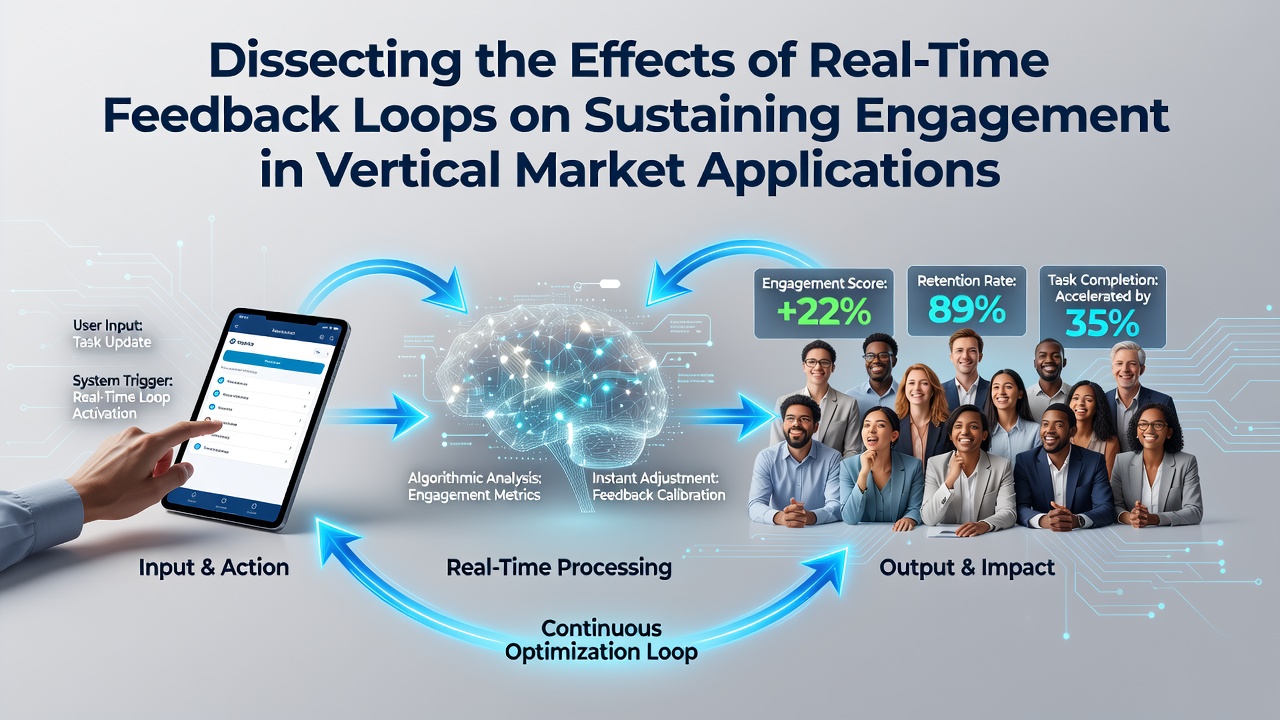
Real-time feedback loops operate as continuous data exchanges between users and specialized software platforms that serve distinct industry sectors such as healthcare administration, financial portfolio management, and logistics coordination, and these systems deliver immediate responses to user actions through metrics, alerts, and progress indicators that adjust dynamically throughout each session. Researchers have documented how such mechanisms influence repeated interactions by providing users with visible updates on performance thresholds, task completions, and comparative benchmarks drawn from aggregated historical patterns.
Core Components of Feedback Mechanisms in Niche Platforms
Vertical market applications integrate sensors, APIs, and analytics engines that capture user inputs and return processed outputs within milliseconds, which allows participants to modify behaviors before completing a workflow cycle. Data shows these loops typically include visual dashboards that track key performance indicators, automated notifications triggered by deviation thresholds, and personalized recommendations generated from machine learning models trained on sector-specific datasets. Observers note that finance platforms often display live portfolio variance alongside regulatory compliance scores, whereas healthcare scheduling tools present real-time patient flow statistics against capacity limits.
Studies conducted across multiple regions reveal that feedback intensity correlates with session duration when users receive granular updates rather than summary reports at fixed intervals. According to findings published by the National Institute of Standards and Technology, platforms that calibrate response frequency to match workflow pace demonstrate higher retention rates in controlled pilot programs tracked through mid-2026.
Observed Patterns in User Retention Across Sectors
Longitudinal tracking of enterprise deployments indicates that real-time loops sustain engagement by reducing uncertainty during complex decision sequences, and this effect appears most pronounced in environments where users manage time-sensitive resources. In logistics applications, for instance, drivers receive continuous route optimization signals that reflect traffic changes, inventory shifts, and delivery windows, which enables proactive adjustments without requiring separate status checks. Evidence from industry reports compiled through October 2026 shows average daily active user increases of 18 to 27 percent in organizations that implemented adaptive notification systems compared with static reporting baselines.
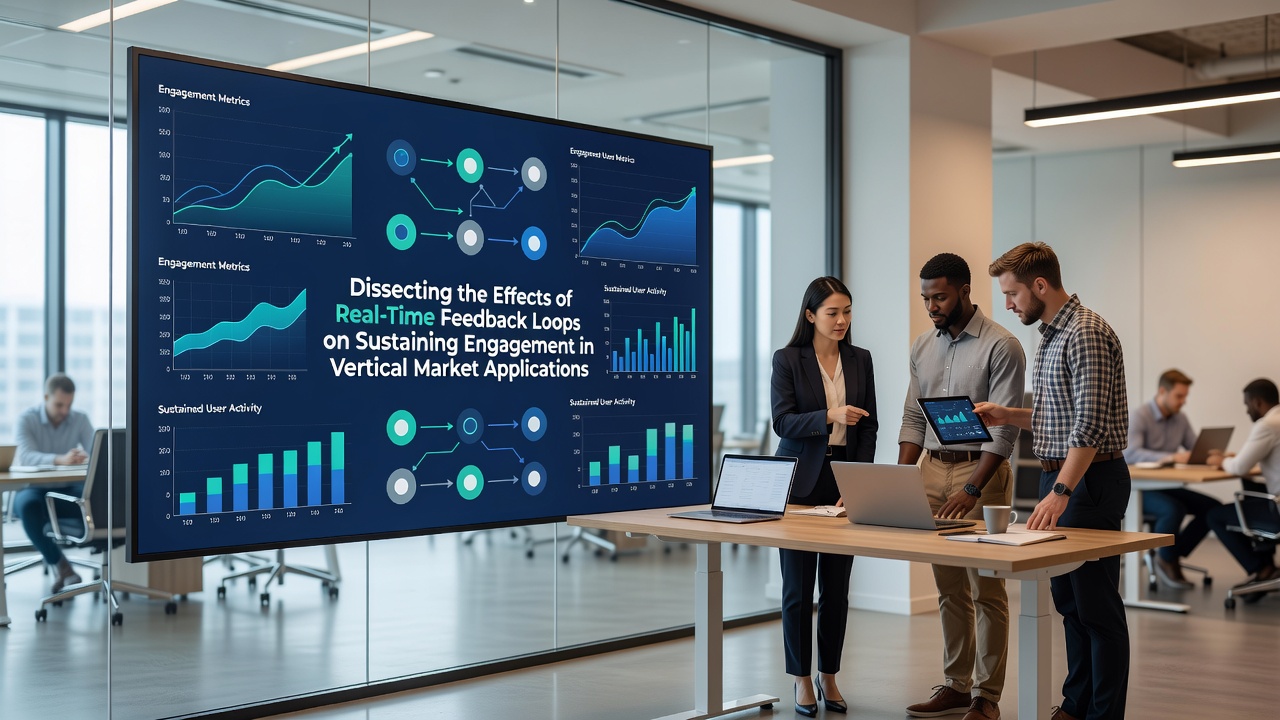
Academic analyses from European research consortia further demonstrate that feedback loops incorporating peer-relative positioning data encourage consistent participation because users can benchmark individual outputs against anonymized team averages. Yet these same studies caution that excessive granularity sometimes leads to cognitive overload when interfaces present more than five concurrent metrics without hierarchical filtering options.
Technical Implementation Considerations
Developers construct these systems using event-driven architectures that prioritize low-latency data pipelines, and integration with existing enterprise databases requires careful schema design to avoid latency spikes during peak transaction volumes. Regulatory frameworks in Canada and Australia require audit trails for any automated recommendations delivered through feedback channels, which adds verification layers that verify recommendation provenance before display. Platforms that embed these compliance checks within the loop itself maintain operational continuity while satisfying oversight requirements.
Case examples from educational technology providers illustrate how progress trackers tied to curriculum milestones increase module completion rates when updates arrive immediately after each assessment submission. Those who have examined deployment records note that systems using color-coded status indicators combined with textual explanations produce more sustained interaction patterns than purely numerical displays.
Measurement Approaches and Data Interpretation
Analysts quantify engagement through metrics such as return frequency, feature utilization depth, and task completion velocity, and real-time feedback influences each of these variables by supplying contextual cues that guide subsequent actions. Research indicates that platforms collecting telemetry at sub-second intervals can detect early signs of disengagement, such as repeated navigation without action, and intervene with targeted prompts before users exit. Government statistical agencies across multiple jurisdictions have incorporated these engagement indicators into broader digital economy assessments conducted during 2026.
One documented implementation in supply chain software revealed that adjusting feedback cadence based on user role profiles extended average session lengths by measurable margins, and the adjustment process relied on iterative testing against historical interaction logs rather than assumptions about optimal timing.
Conclusion
Real-time feedback loops continue to shape interaction patterns within vertical market applications through structured data exchanges that inform user decisions at each operational step. Evidence compiled from technical evaluations, regulatory records, and cross-industry deployments illustrates consistent associations between calibrated feedback delivery and prolonged platform usage across diverse professional contexts. Continued monitoring of implementation variables will clarify how these systems evolve alongside advancing analytics capabilities and shifting compliance landscapes.